How much money are music streaming services making? Quite a lot, apparently. In 2025 Spotify reported revenues in the billions of dollars, Deezer added hundreds of millions of euros, SoundCloud brought in hundreds of millions more, and somewhere deep inside Apple’s financial empire there is an entire division turning our collective inability to sit in silence into shareholder value..
From those numbers alone, two things become obvious. First, people really like listening to music. Second, letting people listen to music can be extremely profitable.
Personally, I sometimes wish there were more ways to enjoy the work of my favourite artists on the move or at home, though that might simply be my instinctive opposition to monopolies and large corporations. Still, even with all my reservations about a handful of companies controlling so much of the market, today's landscape is positively diverse compared to the era when almost everybody seemed to use the same music player.
And for a surprisingly long period of time, that music player was Winamp.

Source: AV Forums
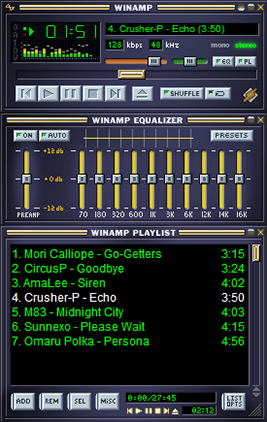
Released in 1997 and developed by Justin Frankel and Dmitry Boldyrev at Nullsoft, Winamp took PCs by storm. It was a simple media player built for the rapidly growing world of MP3 files but, boy oh boy, what a piece of software it was.
By 2000, Winamp had over 25 million users. One year later that number had climbed to more than 60 million. Bear in mind we are talking about an era when carrying a computer in your pocket belonged firmly in the science-fiction section and conversations about artificial intelligence usually involved robots overthrowing humanity. These were serious numbers.
Source: Wikiwand
Personally, I do not remember a single person with access to a computer who wasn't using Winamp. It almost felt like the software came preinstalled with Windows.
So why was it so popular? Partly because there wasn't much choice. There was also Foobar2000, which was supposedly aimed at audiophiles and people deeply committed to experiencing the true sound of music. I remember one guy from my class insisting he could hear a massive difference. Quite what difference he was hearing through built-in computer speakers remains a mystery. Perhaps his mother simply wasn't doing laundry in the next room that day and he confused the absence of background noise with superior audio quality. Regardless, he remains the only person I have ever met who actively chose not to use Winamp.
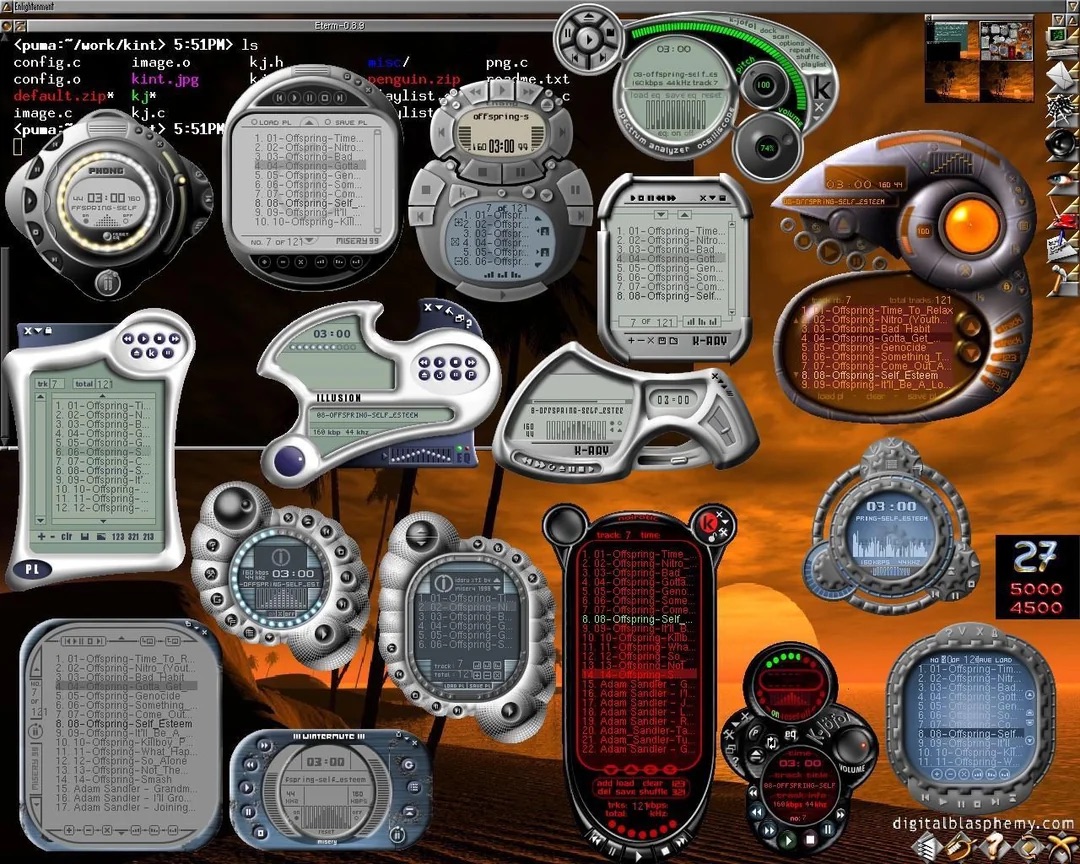
Another reason for Winamp's popularity was customization. Internet forums were packed with user-made skins, layouts, and visual themes. Anyone with even a basic understanding of computers could transform their music player into something that looked less like software and more like the control panel of an intergalactic smuggling vessel.
Winamp Skins
Source: Instagram
Most importantly, Winamp was completely fuss-free. You could download it from practically anywhere and, if your internet connection was held together by duct tape and telephone wires, there was a good chance it arrived bundled on a CD attached to a computer magazine. Best of all, it was free. In its early days the project was partly funded by users voluntarily sending money to the developers because they genuinely loved the software. Imagine trying that business model today.
As impressive as Winamp was, it suffered from one major limitation: it contained absolutely no music. The software was essentially an empty warehouse waiting to be filled. And filling it became an entire subculture of its own. Before streaming services gave humanity access to seventy million songs in exchange for a monthly subscription and its personal data, every MP3 had to be acquired individually.
The “ideal” legal way was simple: you went to a shop, bought a physical CD, and ripped it to MP3 on your computer. Voilà — digital copy secured. You could also borrow CDs from friends, neighbours, classmates — anyone willing to temporarily surrender their taste in music — and slowly build your library one disc at a time. Digital music stores like iTunes appeared in the early 2000s, but for a long time they were limited and platform-dependent, so in practice they were more of a curiosity than a revolution.
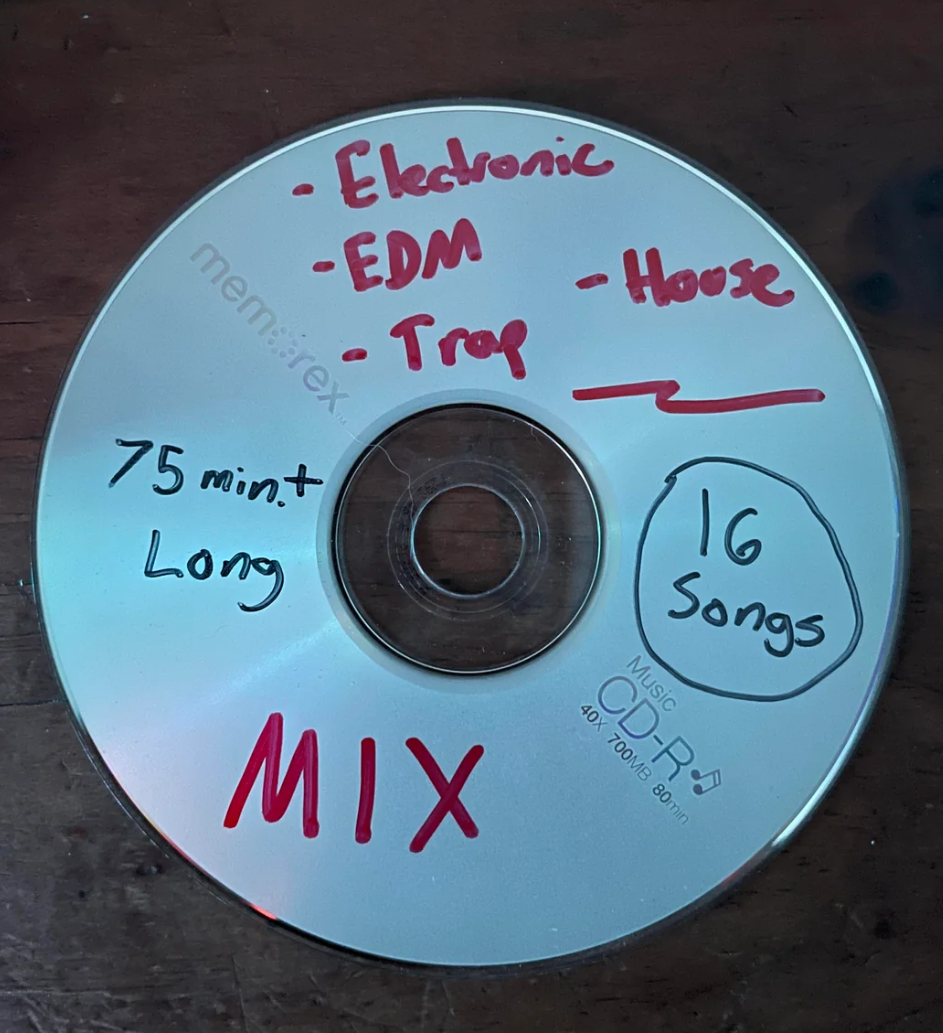
And then there was reality. A scratched CD-R labelled in Sharpie with something like “Music” or “New Songs”, containing 700MB of completely unverified audio files, circulating from hand to hand in schools, parties, and other social gatherings. A chaotic archive of everything from chart hits to random MP3s whose origins were best not investigated too closely. Most of it, inevitably, had passed through Napster or other peer-to-peer networks.
"Homemade" mixtape
Source: Reddit
With almost unlimited access to home-burnt CDs, an almost inevitable obsession with organising music on hard drives followed. Folders inside folders, carefully named directories, and an entire internal logic that usually made sense only to the person who created it. The more files you collected, the less manageable it all became. Organisation stopped being optional and became part of the process itself.
You had “Rock”, “Hip-Hop”, “Best Of”, “Random”, “To Sort”, “New Folder (3)”, and about five different versions of the same album depending on where you downloaded it from. Entire discographies were collected, renamed, corrected, sometimes re-tagged with obsessive attention to ID3 metadata, and then reorganised again a week later because something didn’t feel right.
All of this organisation created a strange illusion of control. Your music library looked complete, structured, even permanent. But it only existed in one place. The moment you left the house, none of it mattered.
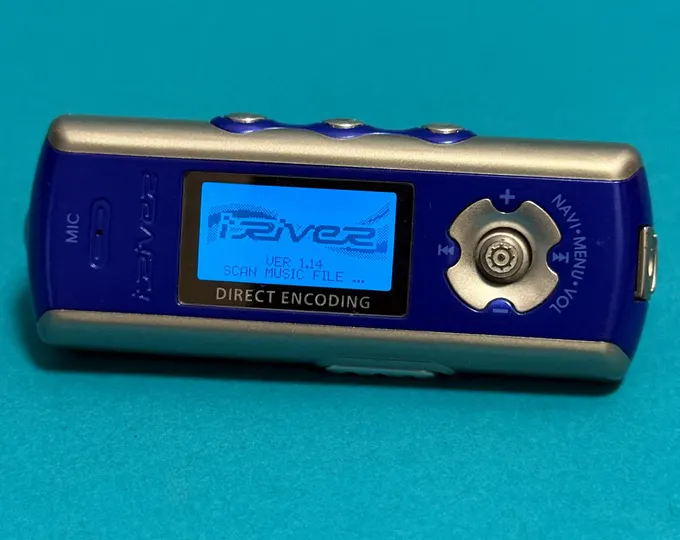
On this wave, portable MP3 players appeared. Subjectively, my favourite hardware of that era — early precursors to what would later become the Apple iPod.
At first they looked almost like a joke: small USB-stick-like devices with tiny screens and even smaller storage. 128MB was common, sometimes even less. Which meant you could fit maybe 20–30 songs if you were careful, fewer if you weren’t.
This immediately changed the logic of music itself. You couldn’t carry everything anymore, so you had to choose. Your entire discographies and carefully prepared libraries suddenly didn’t matter in the same way. Now you had to decide what deserved space outside the house.
That’s where the idea of being a “music curator” really started. Not in a modern streaming sense, but in a very literal one: if you wanted to go outside with your music, you had to manually decide what version of your library was allowed to exist beyond your computer. You were effectively a Spotify playlist editor before Spotify even existed.
Later on, they evolved into what in my part of the world were known as “MP4 players” — cheap portable devices that took the same concept and quietly added video files into the equation, as if watching low-resolution Lil Wayne's music videos on a 2-inch screen was a natural extension of human progress.
MP3 Player
Source: Etsy
Winamp started quite a revolution. From very basic software allowing users to play audio files, through a collective obsession with owning as much music as possible, to the development of portable music players, it quietly shaped how an entire generation experienced sound.
And yet, if you look at it from today’s perspective, the question is almost comical: what was it worth?
What was the revenue last year? Probably massive, you might think. In reality, Winamp as we knew it never really reached that world. After being acquired by AOL and later passing through multiple owners, it slowly faded into irrelevance, eventually disappearing from the centre of digital culture it once helped define.
There is no clean ending here. Streaming services didn’t just replace Winamp — they removed the entire problem Winamp was built to solve. With platforms like Spotify or Apple Music, the question of “where do I get the file?” simply stopped existing. Even if you lose the ability to customise every colour and skin of your player, the trade-off is immediate access to almost everything ever recorded with a single click.
Winamp belonged to a time when listening to music required effort. Not much effort, but enough to make it a process. Today, that process is gone. And in a strange way, so is the attention that came with it.
Maybe that’s the real difference. Not better sound, not better software — just a different relationship with time. Back then, you waited for music. Now, music waits for you. And somehow, it doesn’t feel the same.